
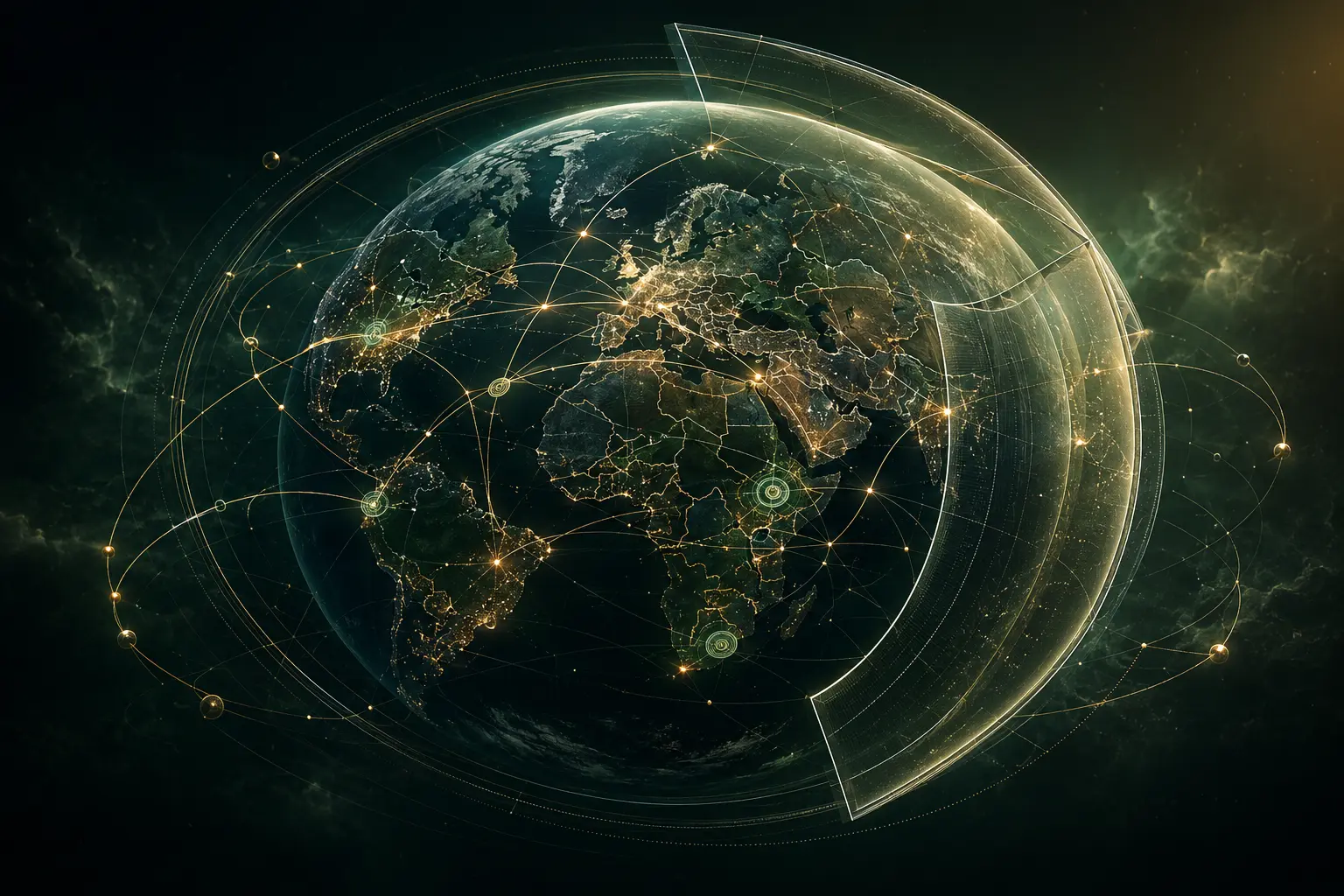
The ticker is not the exposure
Traditional equity research usually begins with the issuer: its domicile, listing venue, financial statements, industry, and valuation. Those inputs matter, but they can leave a material blind spot. A multinational company may earn a large share of its revenue in one jurisdiction, depend on factories or technology hubs in another, and rely on politically sensitive suppliers in a third.
Geopolitical events reach portfolios through these operating connections. The IMF finds that major geopolitical events—especially military conflicts—can produce larger and more persistent asset-price effects than ordinary episodes of geopolitical tension. The relevant question is therefore not simply where a security is listed, but where the company could lose demand, production capacity, market access, capital, or strategic flexibility.
Geopolitical risk is an exposure-mapping problem before it is a forecasting problem.
Map three transmission channels
- Revenue exposure: estimate where end demand and operating profit are generated, including material subsidiaries and markets that are not separately disclosed.
- Supply-chain and operating dependency: identify critical inputs, manufacturing sites, internal service centers, logistics routes, technology infrastructure, and single-source suppliers.
- Institutional and political sensitivity: examine sanctions, export controls, licensing, government relationships, public positioning, adverse records, and evidence of investment or divestment.
The three channels interact. A market can be small in reported revenue yet essential to a critical component. A local service center can be operationally important even when the company sells little in that country. Conversely, a large customer market may be replaceable if production and intellectual property remain diversified.
Convert the map into mitigation
Mitigation does not require predicting the next conflict or removing every cross-border exposure. It requires identifying single points of failure and deciding how much correlated risk a portfolio is willing to carry. Scenario analysis can test what happens if a company loses access to a supplier, faces tariffs or export controls, encounters local capital restrictions, or experiences a sudden fall in demand.
The OECD’s supply-chain work emphasizes diversification, adaptability, and trusted cooperation rather than assuming that complete reshoring is always efficient. The same principle applies to portfolios: resilience can come from alternative suppliers, broader end markets, substitution capacity, stronger governance, smaller position sizes, or replacing a holding with a company whose economic exposures are less concentrated.
How FWI applies the lens
- Start with company filings, subsidiary records, revenue disclosures, supplier and facility information, and regulatory or sanctions data.
- Research in English and relevant local languages to reduce the gaps created by incomplete country-level disclosure.
- Document the rationale for each exposure assessment, compare companies on a common scale, and review the evidence as conditions change.
- Use the resulting signal alongside—not instead of—fundamental analysis, valuation, position sizing, and portfolio construction.
This approach cannot eliminate geopolitical uncertainty. It can, however, make hidden dependencies visible and turn a broad macro concern into a repeatable company-level decision process.
Research sources
- McKinsey & Company — Economic conditions outlook, March 2026
- IMF — Geopolitical Risks: Implications for Asset Prices and Financial Stability (April 2025)
- OECD — Supply Chain Resilience Review (2025)
- OECD — Economic security and vulnerabilities in international supply chains (2025)
This material is for informational and educational purposes only. It does not constitute investment advice, a recommendation, or an offer to buy or sell any security.